Shopware 6 vs. Shopify
Shopware or Shopify? We compare technology, costs, B2B features and scalability – for an informed decision in 2026.
Why Comparing Shopware and Shopify Matters
Anyone looking to build an online shop or replace an existing shop system will sooner or later face the question: Shopware or Shopify?
Both platforms are among the best-known e-commerce systems in the German-speaking market – but they follow completely different approaches. While Shopify stands out above all for quick setup and ease of use, Shopware offers significantly more freedom when it comes to customization, interfaces, hosting and more complex e-commerce processes.
The choice of shop system has long-term effects on scalability, performance, extensibility and ongoing costs. Especially for growing shops or custom requirements the wrong decision can later lead to technical limitations, high follow-up costs or complex migrations .
We have already examined the costs of Shopware, Shopify, WooCommerce, Magento and JTL in detail in our e-commerce guide “The Best Shop Systems in Germany 2026: Shop Systems Compared for Decision-Makers”.
Which Companies the Comparison Is Relevant For
The comparison between Shopware and Shopify is particularly relevant for companies that want to expand their online shop professionally or scale it over the long term.
These include, for example:
- mid-sized companies
- growing e-commerce shops
- B2B companies
- retailers with custom processes or interfaces
- companies with ERP, PIM or multi-shop structures
While Shopify is particularly interesting for standardized e-commerce projects, Shopware often plays to its strengths when requirements become more complex, custom development is needed and long-term scaling is a priority.
Which shop system is better suited therefore depends less on the “better-known name” and more on the technical requirements, planned growth and internal processes of the company.
Quick Overview: Shopware vs. Shopify
Shopware and Shopify follow two different approaches in e-commerce.
Shopify is a cloud-based SaaS solution aimed primarily at companies that want to get started quickly and with as little technical effort as possible. Shopify handles hosting, maintenance and updates directly. This makes the system particularly easy to use and quick to deploy.
Shopware, on the other hand, offers significantly more freedom in hosting, custom Shopware development and the integration of external systems. The shop system is particularly suitable for companies with more complex requirements, custom processes or long-term scaling needs.

While Shopify is especially attractive for standardized e-commerce projects, Shopware is often used where custom processes, ERP integrations, B2B structures or specific requirements need to be implemented.
What Is Shopware?
Shopware is a flexible open-source shop system that is particularly widespread in German-speaking e-commerce. Through open APIs, plugins and custom extensions, the platform can be adapted technically and functionally to complex business processes — the section ‘Who Is Shopware Suitable For?’ shows in detail which requirements this includes.

What Is Shopify?
Shopify is a cloud-based SaaS shop system. Hosting, updates, security and technical maintenance are handled centrally by Shopify itself, allowing shops to be set up particularly quickly and with little technical effort — the following sections show who this is suitable for and where the limitations lie.

Shopware vs. Shopify Comparison
Both shop systems follow different approaches and are therefore suitable for different e-commerce requirements. While Shopify focuses above all on simplicity and rapid deployment, Shopware offers significantly more freedom in customization, hosting and technical architecture.

The key differences at a glance:
| Area | Shopware | Shopify |
|---|---|---|
| System Type | Open Source | SaaS / Cloud |
| Hosting | freely selectable | integrated |
| Technical Effort | higher | low |
| Customization | very flexible | limited |
| B2B Features | extensive (depending on edition) | limited |
| Scalability | individually adaptable | scalable within a standardized model |
| Maintenance | your own responsibility | handled by Shopify |
| SEO Customization | very flexible | solid standard features |
| APIs & Interfaces | very open | partly restricted |
| Extensions | plugins + custom development | mainly apps |
| Getting Started | more complex | easier |
| Ongoing Costs | depend on hosting & development | predictable monthly costs |
Note: Information refers to Shopware 6 (Community Edition as the basis, B2B Components from the Evolve edition) and Shopify (Advanced plan or Shopify Plus for extended B2B features), prices for the German market. Research status: August 2026.
Costs and Pricing Structure
Shopify works with fixed monthly plans. Additional costs often arise through apps, transaction fees (Shopify Payments) or higher Shopify Plus plans.
With Shopware, costs depend much more on the individual project. While the Community Edition can be used free of charge, there are costs for hosting, development, maintenance and custom extensions.
Especially for larger or steadily growing shops, total costs often differ significantly from the pure entry prices — our 5-year TCO comparison.
Hosting and Performance
Shopify handles hosting, updates and infrastructure entirely on its own. This allows a shop to be operated quickly and without technical effort.
With Shopware, responsibility for hosting and infrastructure lies with the company or the supporting agency. This does mean more effort, but it also provides significantly more control over performance, server architecture, scalability, caching and Core Web Vitals. Especially for larger shops or more complex requirements, this can be an advantage in the long term.
Scalability and SEO
Both systems can generally be scaled, but they follow different approaches.
Shopify scales primarily within its own SaaS ecosystem and is well suited to standardized growth processes.
Shopware offers more freedom for:
- multi-shop structures
- international shops
- custom data models
- more complex product structures
- ERP and PIM integrations
Shopware also offers more technical intervention options in SEO, while Shopify already provides many standard features out of the box.
Plugins, Apps and Extensions
Shopify relies heavily on apps from its own App Store. Many functions can therefore be added quickly, but this often creates a strong dependency on third-party providers (a cost factor and a risk of mutual incompatibility).
Shopware combines plugins with custom extension options. This allows processes to be adapted much more deeply and developed more flexibly. Especially for custom requirements or more complex workflows, this is an important difference.
Maintenance and Technical Operations
Shopify requires significantly less maintenance. Updates, hosting, security and system maintenance are handled centrally by Shopify itself.
With Shopware, updates, plugins, hosting and technical optimizations must be actively managed. In return, companies gain significantly more control over the technical infrastructure and the shop system’s long-term development.
Security and Support
Both systems offer high security standards. Shopify handles security updates and PCI compliance centrally within its own cloud infrastructure.
With Shopware, security depends more strongly on hosting, maintenance and technical support. Professional updates and regular system maintenance are especially important here. In return, companies benefit from a very open system architecture and custom extension options.
Who Is Shopware Suitable For?
Shopware is particularly suitable for companies that need more than a classic standard online shop.
The platform particularly plays to its strengths when:
- custom processes need to be represented
- multiple systems need to be connected
- international shops are planned
- high scalability is required
- B2B features are needed
- long-term further development is a priority
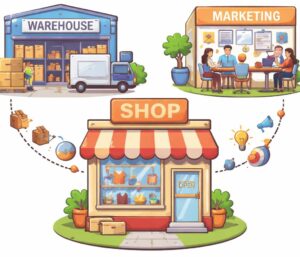
Mid-Sized and Growing Companies
Viele mittelständische Unternehmen setzen auf Shopware, weil das System flexibel mit den Anforderungen wachsen kann.
Especially with:
- growing product data volumes
- multiple sales channels
- more complex workflows
- custom requirements
a purely standardized shop system often reaches its limits.
Shopware offers significantly more customization options and technical freedom here.
Custom Requirements and Interfaces
A major advantage of Shopware lies in its open system architecture. ERP, CRM or PIM systems can be flexibly connected via APIs. Custom processes, special checkout flows or proprietary functions can also be adapted much more deeply than with many SaaS solutions.
B2B and Enterprise Projects
Shopware is frequently used for larger e-commerce projects with more complex requirements .
These include, for example:
- B2B platforms
- multi-shop systems
- international shops
- custom pricing logic
- customer-specific processes
- headless commerce projects
Thanks to its flexible architecture, the platform can be expanded and scaled over the long term.
High Scalability and Performance
Even with growing traffic or large product-data volumes, Shopware offers many options for technical optimization. Through custom hosting, caching, server optimization and scalable infrastructure, the system can be tailored specifically to high requirements.
Who Is Shopify Suitable For?
Shopify is particularly suitable for companies that want to enter e-commerce quickly and with as little technical effort as possible.
The system is aimed primarily at shops with:
- standardized processes
- manageable customization requirements
- low technical administration effort
- rapid go-live goals
Because hosting, updates, security and maintenance are handled directly by Shopify, the platform is particularly suitable for companies without their own technical infrastructure.

Fast Entry into E-Commerce
Products, payments, shipping options and designs can be configured relatively quickly without in-depth technical knowledge. Many functions are already preconfigured, allowing new shops to be used productively within a short period of time. This makes Shopify especially attractive for smaller shops, start-ups, direct-to-consumer brands and smaller retail companies.
Standardized E-Commerce Processes
Shopify is particularly suitable for classic online shops with standardized processes: product sales without complex pricing logic, simple product structures, standardized checkout processes, classic B2C shops and smaller international shops. Many functions can be extended via apps without requiring custom development.
Lower Technical Effort
Because Shopify is operated as a SaaS solution, a large part of the technical operations is eliminated — Shopify centrally handles servers, hosting, updates, security updates, scalability and infrastructure. However, for settings outside the standard, a good Shopify agency is often still required.
Typical Challenges with Shopify
Shopify enables a fast entry into e-commerce, but it also comes with some limitations for more complex projects.
Limited Customization
Many adjustments in Shopify can only be implemented within the predefined system structure. Custom requirements such as special checkout processes, complex pricing logic, custom data structures or deeper backend modifications are often possible only to a limited extent or through workarounds. Especially for larger or technically more complex projects, this can become a long-term problem.
Dependency on Apps
Many additional functions in Shopify are integrated through external apps. While this enables fast extensions, it often leads to additional ongoing costs, dependencies on third-party providers, compatibility problems and performance losses. Especially with many installed apps, the technical and organizational effort increases significantly.
Ongoing Costs
Shopify’s entry costs initially appear manageable, but often increase significantly as requirements grow.
Additional costs arise, for example, through:
- apps
- higher-tier plans
- external payment providers
- custom extensions
Especially for larger shops, the entry price alone should therefore not be considered.
Limitations in More Complex Projects
For classic standard shops, Shopify is often a very efficient solution.
However, with:
- complex B2B processes
- custom interfaces
- very large product-data volumes
- special system requirements
- extensive internationalization
the system can partially reach technical limits.
Typical Challenges with Shopware
Shopware offers significantly more flexibility and technical freedom, but this also entails greater technical effort.
Higher Technical Effort
Unlike SaaS systems such as Shopify, hosting, maintenance, updates and technical optimizations must be actively managed.
This includes, among other things:
- server administration
- plugin updates
- security updates
- performance optimization
- technical maintenance
Without the technical expertise of an experienced Shopware agency this can quickly become complex.
Hosting and Infrastructure Requirements
Shopware’s performance depends heavily on the infrastructure used.
For larger shops, the following are often required:
- high-performance servers
- optimized hosting
- caching systems
- Redis
- Elasticsearch
- CDN solutions
in order to achieve stable loading times and good Core Web Vitals.
This results in greater technical planning and support effort.
Higher System Complexity
Thanks to its open architecture, Shopware offers a very wide range of customization options.
At the same time, however, this also increases technical complexity — especially with:
- custom extensions
- interfaces
- ERP/PIM integrations
- multi-shop systems
- international projects
The more customized the system is, the more important clean architecture and long-term technical support become.
Professional Support Is Advisable
Many companies rely on a specialized Shopware agency or internal development teams for larger projects.
This allows the following to be planned and managed better over the long term:
- updates
- security
- performance
- scalability
- further development
.
Conclusion of the Shopware vs. Shopify Comparison
Whether Shopware or Shopify is better suited depends primarily on the technical requirements, planned business processes and long-term growth of the company. Shopify is particularly suitable for companies that want to start quickly and operate a standardized online shop without high technical effort. Shopware, by contrast, offers clear advantages for custom processes, ERP integrations, multilingual setups, B2B commerce or high-performance enterprise shops with a high degree of flexibility.
A well-founded decision should take into account costs, hosting, performance, scalability, extensibility through plugins and apps, as well as support for B2B features — not just the monthly entry costs, but above all future requirements.
FAQ Section
Is Shopware Better for SEO Than Shopify?
Both Shopware and Shopify offer good SEO foundations for online shops. However, Shopware provides significantly more options for technical SEO optimization, custom URL structures, Core Web Vitals and performance adjustments. Especially for larger shops with complex requirements, companies benefit from Shopware 6’s high flexibility in SEO and performance optimization.
Which Is Cheaper: Shopware or Shopify?
Shopify incurs fixed monthly costs and additional fees for Shopify apps and Shopify Payments. The Shopware Community Edition can be used free of charge, but requires your own hosting, maintenance and technical support. Which solution is cheaper in the long term depends heavily on the requirements, scalability and desired range of functions. We have examined the costs over 5 years in more detail in our guide.
Who Is Shopify Plus Worthwhile For?
Shopify Plus is particularly suitable for fast-growing companies with high revenue that are looking for a scalable SaaS solution without their own hosting effort. International D2C brands in particular benefit from the extended features, automations and B2B capabilities of Shopify Plus.
Can You Switch from Shopify to Shopware Later?
Yes, switching from Shopify to Shopware is possible without problems. Products, customers, orders and other shop data can be transferred as part of a professional migration. Many companies switch to Shopware once custom requirements, B2B features or complex interfaces become necessary.
Which Platform Is Better Suited for B2B?
For B2B commerce, Shopware offers clear advantages. Through the B2B Components (from the Evolve edition), Shopware 6 provides features such as custom price lists, customer groups, approval processes and ERP integrations.
Is Shopware Suitable for Large Shops?
Yes, Shopware is very well suited to large and scalable e-commerce projects. Thanks to its flexible architecture, custom hosting options and high extensibility, Shopware can also handle large product databases, international shops and high visitor volumes with strong performance.
Which Platform Offers More Customization?
Shopware offers significantly more customization options than Shopify. As an open-source system, Shopware can be flexibly adapted both technically and visually. Custom features, special interfaces or complex business processes can be implemented much more easily than with a closed SaaS platform such as Shopify.
How Important Is Hosting for Shopware?
Hosting has a major impact on performance, security and scalability in Shopware. High-performance hosting with an optimized server configuration improves loading times, Core Web Vitals and shop stability. Professional hosting is especially important for larger Shopware projects.
Which Platform Is Better for Core Web Vitals?
Both shop systems can achieve good Core Web Vitals. Shopify already provides a solid technical foundation through its SaaS infrastructure. Shopware, however, enables significantly deeper loading-time optimizations in hosting, caching, themes and custom development, making very high Lighthouse and Core Web Vitals scores achievable.
Can ERP Systems Be Connected to Both Shop Systems?
Yes, both Shopware and Shopify can be connected to ERP systems. Thanks to its open APIs, Shopware generally offers more flexibility for custom ERP, CRM or PIM integrations. Shopify relies more heavily on apps and standardized integrations, which can reach their limits more quickly in complex processes.
Mathias Goldhan
Mathias Goldhan laid the foundation for today’s digital agency in 1994 and has been leading HQ GmbH strategically and operationally since 2005. With more than three decades of experience in software development and systems architecture, he advises medium-sized businesses and brands on the digitalization of business-critical processes. He is the strategic mind behind HQ GmbH’s positioning among the Top 100 owner-managed digital agencies (iBusiness/BVDW).
As a recognized SaaS pioneer and specialist in high-performance hosting, he designs highly available cluster infrastructures and leads the technical rescue of stalled large-scale e-commerce projects. He contributes his expertise in resilient systems and API-based B2B automation internationally between the company’s headquarters in Thuringia and its branch in Spain.